The Blue Zones

Five places where people quietly live past 100.

Here is what they eat, how they live, and how you can bring a little of it into your own kitchen.

A white sand cove with turquoise water on the coast of Sardinia

What is a Blue Zone?

The term comes from researchers who went looking for the places on earth where an unusual number of people reach very old age in good health. They drew blue circles on a map around the first village they found in Sardinia, and the name stuck. Writer Dan Buettner and his team later expanded the search and identified five regions with the same pattern: Sardinia (Italy), Okinawa (Japan), Ikaria (Greece), the Nicoya Peninsula (Costa Rica) and Loma Linda (California).

These cultures could hardly be more different. They speak different languages, farm different land and worship in different ways. Yet when researchers compared them, the same habits kept appearing. People eat mostly plants, with beans as a daily cornerstone. They move without thinking about it. They have a reason to get up in the morning, a rhythm of rest, and a circle of people they belong to.

None of this is a magic formula, and nobody can promise you a particular number of years. But it is a pattern worth borrowing, and the food is a delicious place to start.

The plate, in one paragraph

Imagine a table where vegetables, greens and beans take up most of the space. Add whole grains or good bread, a drizzle of olive oil, a handful of nuts, fruit for dessert. Fish, eggs, yogurt or a little meat show up now and then, in small portions, as a flavor rather than the main event. Nothing is ultra-processed, nothing is rushed, and nobody eats alone if they can help it. That is the idea behind everything we cook.

A tour of the five

What each place puts on the table.

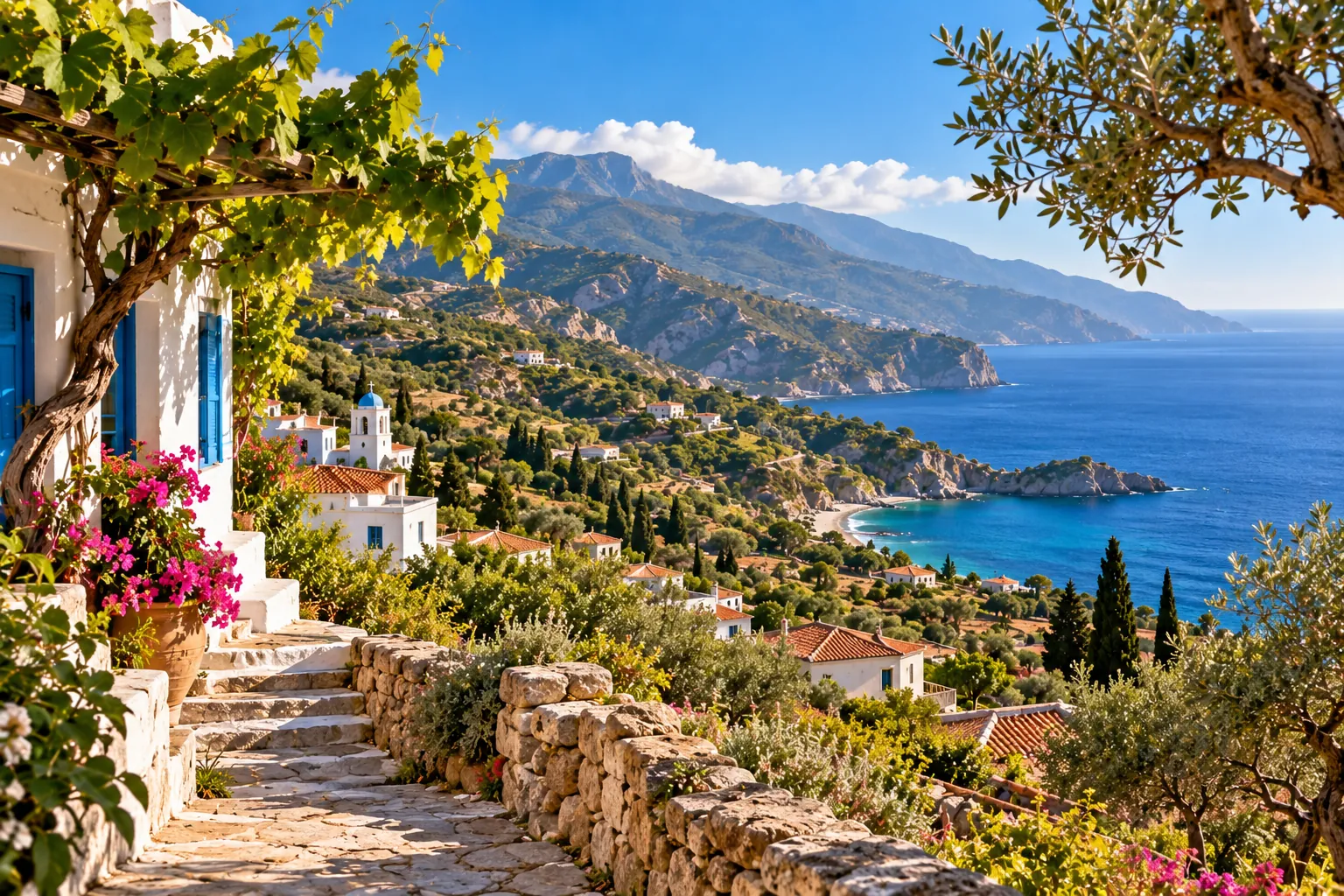
Sardinia, Italy landscape

Sardinia, Italy

The shepherd’s table

In the mountain villages of Sardinia, daily life has long meant steep hills, small farms and big family lunches. People walk, tend animals and gardens, and eat what the season hands them.

  • Minestrone thick with beans, barley and garden vegetables
  • Whole-grain, sourdough-style bread and flatbread
  • Sheep and goat cheese in modest portions
  • Meat saved for Sundays and celebrations

Try it: Sardinian Minestrone, our first Cook Together recipe.

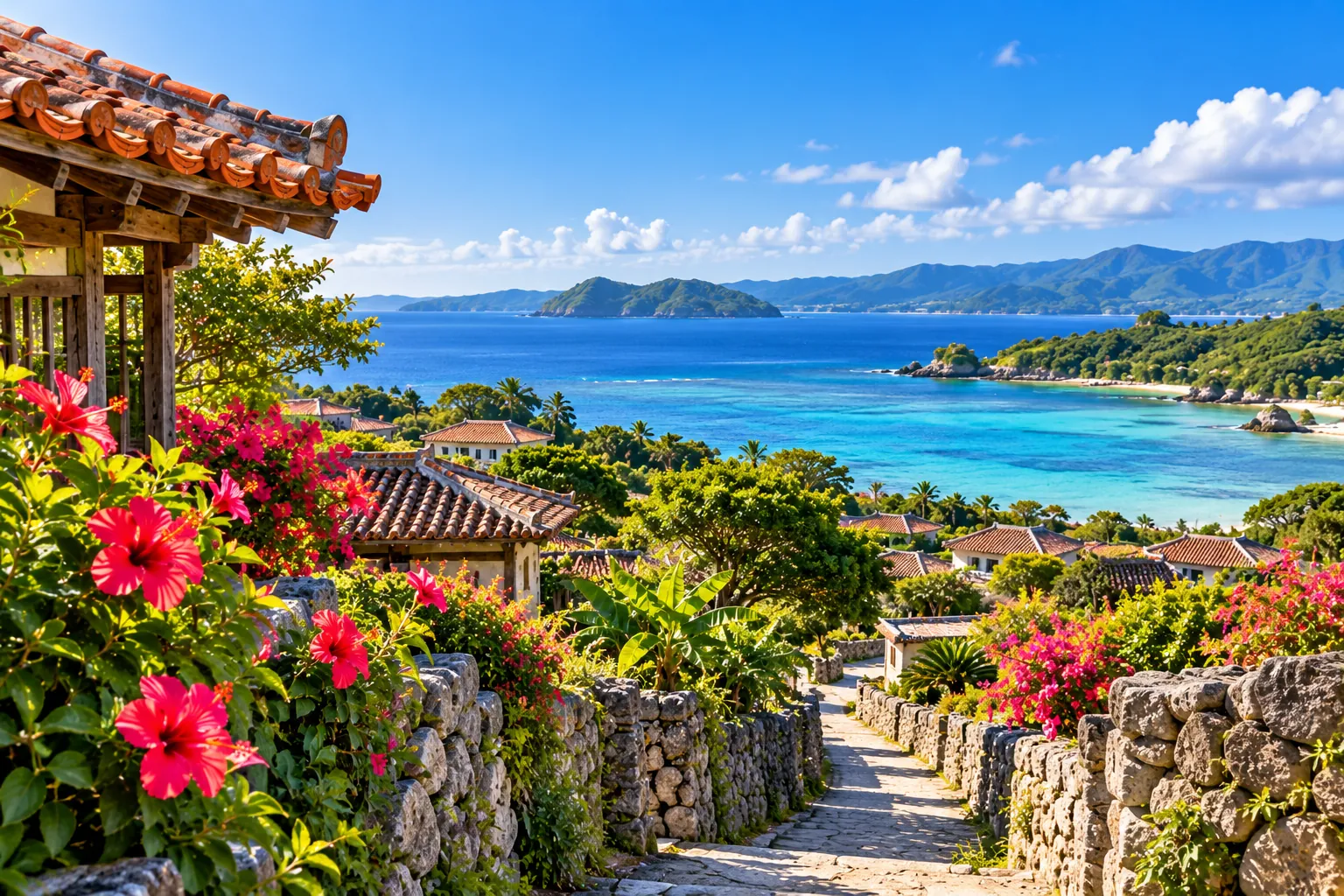
Okinawa, Japan landscape

Okinawa, Japan

The garden and the purpose

Traditional Okinawan eating leans heavily on vegetables, with sweet potatoes at the center of the plate, plus tofu, seaweed and bitter melon. Two ideas matter as much as the food: hara hachi bu, stopping when you are about 80 percent full, and ikigai, a reason to get up in the morning.

  • Purple and orange sweet potatoes as the everyday staple
  • Tofu, soy and plenty of greens
  • Goya champuru, the famous bitter melon stir-fry
  • Small groups of lifelong friends, called moai

Try it: Ginger Egg-Drop Soup and our champuru-style zucchini stir-fry.

Ikaria, Greece landscape

Ikaria, Greece

The slow island

On this rocky Aegean island the afternoons are long and the greens are wild. Meals are built from beans, vegetables, olive oil and herbal teas, shared with neighbors who drop by without calling first.

  • Chickpea and lentil stews with olive oil and rosemary
  • Wild greens and garden vegetables, boiled or wilted with lemon
  • Honey, herbal teas and a little yogurt
  • Naps, walks and conversation as daily routine

Try it: Chickpea Stew with Rosemary, and Wilted Greens Salad.

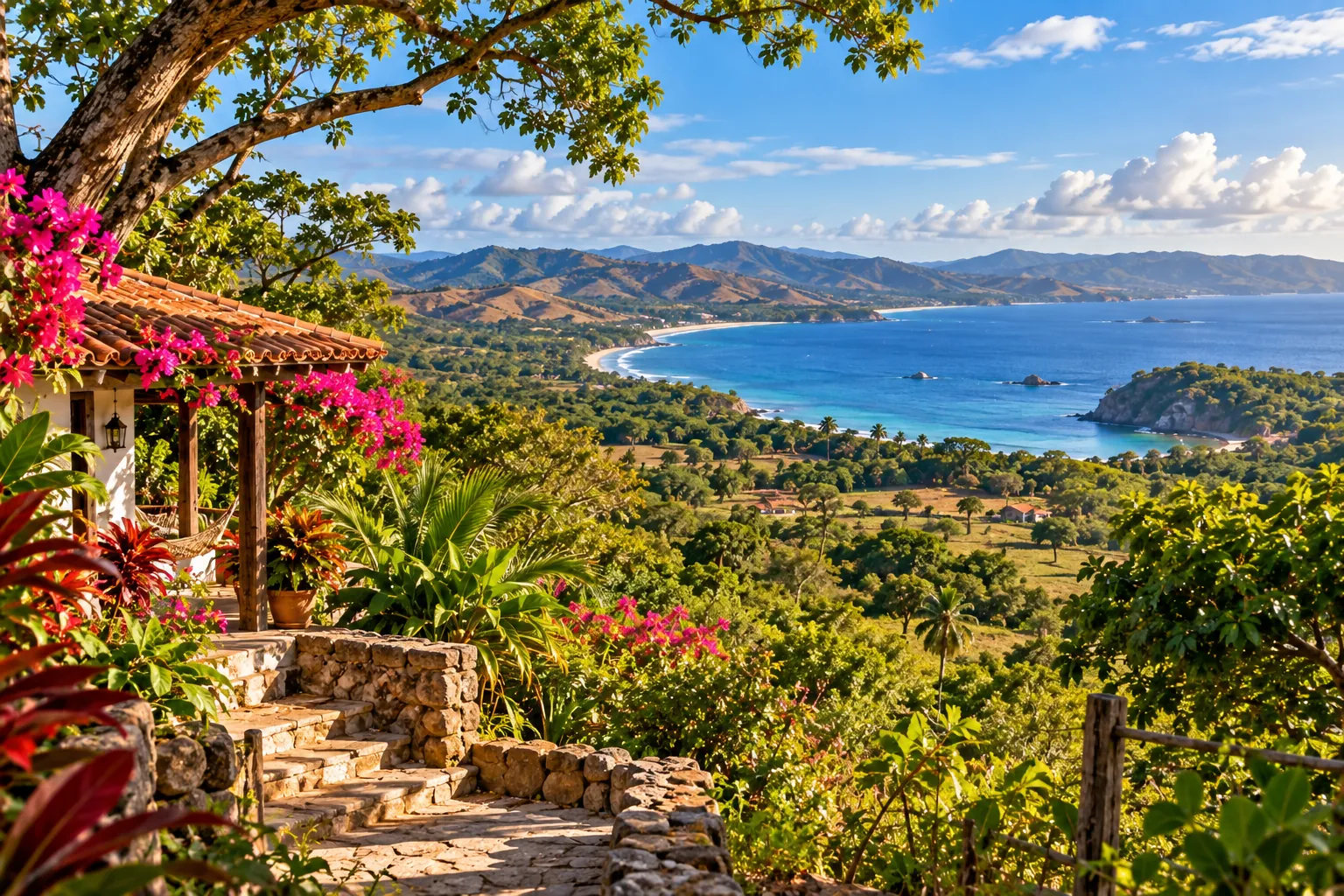
Nicoya, Costa Rica landscape

Nicoya, Costa Rica

Corn, beans and squash

The Nicoya Peninsula is built on a classic trio: corn, beans and squash. Add rice, tropical fruit and a strong sense of plan de vida, a personal reason for living, and you have a way of eating that is simple, cheap and deeply satisfying.

  • Gallo pinto: rice and black beans
  • Corn tortillas filled with beans and greens
  • Squash and bean stews
  • Papaya, mango and other fresh fruit

Try it: Gallo Pinto with Avocado, and Black Bean & Squash Stew.

Loma Linda, California landscape

Loma Linda, California

Plants, nuts and a day of rest

Many people in this Southern California community are Seventh-day Adventists, who follow a largely plant-based diet and set aside one day each week for rest, faith and company. It is proof that a Blue Zone can be found close to home.

  • Oatmeal, whole grains and legumes
  • A handful of nuts most days
  • Plenty of vegetables and fruit, with little or no meat
  • A weekly day of rest and community

Try it: Oatmeal with Walnuts & Berries, and our Lentil & Vegetable Soup.

Beyond the food

The Power 9: habits they share.

Researchers boiled down what the Blue Zones have in common to nine habits. Food is only one of them. Which one could you try this week?

  1. Move naturallyGardens, hills and errands on foot. Not the gym, just a life that makes you walk.
  2. PurposeIkigai in Okinawa, plan de vida in Nicoya: know why you get up in the morning.
  3. Down-shiftNaps, prayer, a quiet glass of tea. Every culture has a way to let stress go.
  4. The 80% ruleStop eating when you are about 80 percent full, and eat the smallest meal in the evening.
  5. Plant slantBeans, greens, whole grains and nuts at the center. Meat is a side or a treat.
  6. Wine at five (optional)Where people drink, it is modest, with food and friends. Never required.
  7. BelongMost centenarians in these places belong to a faith-based or close community.
  8. Loved ones firstKeeping family close, caring for aging parents and committing to a partner.
  9. The right tribeFriends who nudge you toward healthy habits make those habits easy.
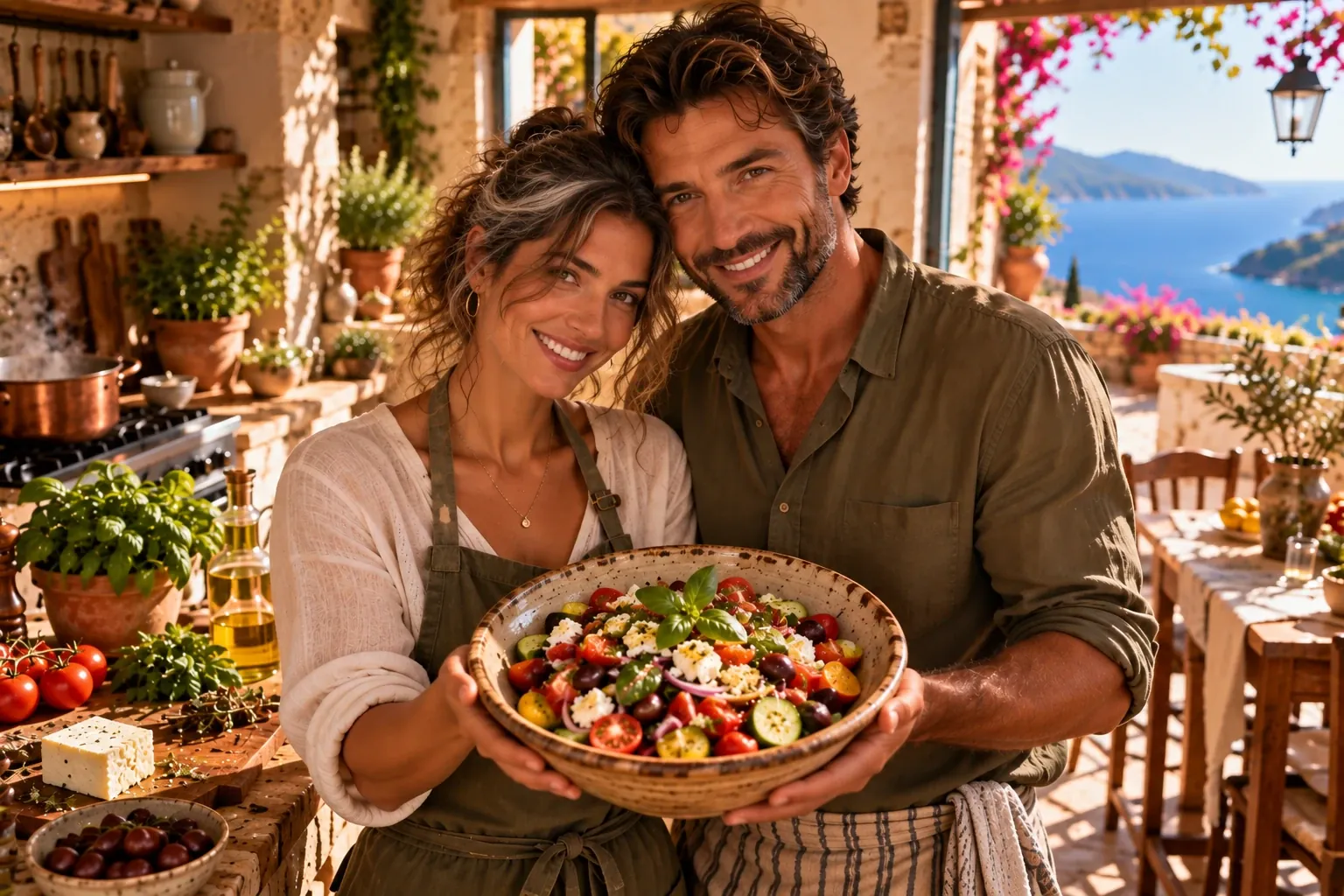
Elias and Mara holding a bowl of Mediterranean salad in their kitchen

From the pages to your plate

We turned all of this into fourteen days of dinner.

Old Enough to Work gives you the menus, shopping lists and recipes so you can try the pattern without guessing.